
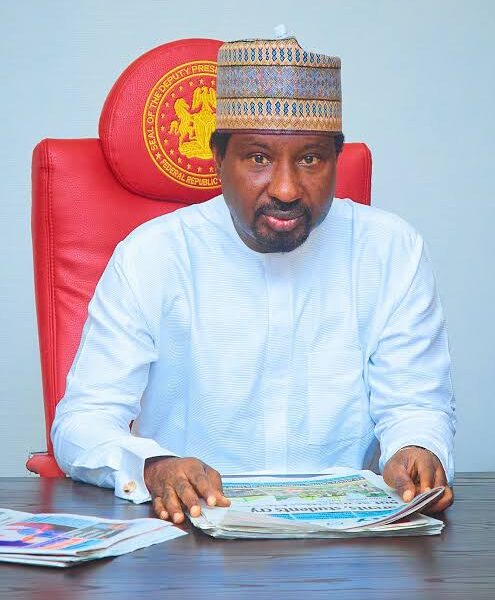
Senator Barau Jibrin, the deputy president of the Senate, has challenged Yemi Osinbajo, the former vice president’s assessment of the economic and democratic challenges the country is currently facing, arguing that the administration of President Bola Ahmed Tinubu is working to address longstanding problems but has failed to communicate its efforts effectively to Nigerians.
Barau said the point that the public is dissatisfied with the economy and democratic governance, that was made mention of by Osinbajo through Afrobarometer surveys, in a way shows the absence of connection between government policies and citizens’ understanding of what the authorities were doing to improve their lives.
On Tuesday, the 27th of October, he gave the speech in Yola, Adamawa State, during a public lecture that was titled “Democracy and Development: Rethinking the Leadership Question,” organized to mark the 59th birthday of Governor Ahmadu Umaru Fintiri.
Yemi Osinbajo, who was the vice president of the federation from the year 2015 to 2023, had created awareness that the public were dissatisfied with democracy, economic hardship, declining confidence in government, and discouraging youth from participating in any activity that had to do with electoral politics.
According to the findings of Afrobarometer, the former vice president stated that 64 percent of Africans preferred a democratic system of government to other forms of government, but only 38 percent were satisfied with how democracy was working in their countries. Figures showing that 59 percent of Africans considered their national economies to be in poor condition were cited by him, while he also stated that 51 percent believed their economies had deteriorated.
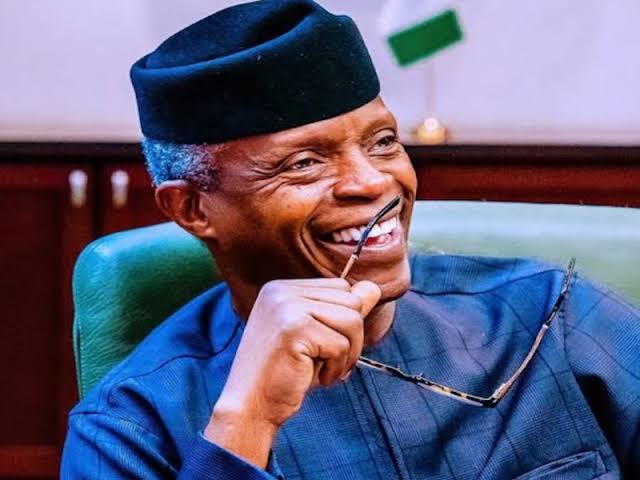
Image Credit: Conferences. leadership.ng
Osinbajo stated that the rate at which the cost of living, unemployment, and inadequate healthcare were rising, and voter participation was declining, could further reduce the confidence the people have in democratic governance, especially among young people. In response to what Osinbajo said, Barau explained his perspective of the presentation, which he viewed as thought-provoking but stated that the negative perception the people have that was identified by the research did not fully show the efforts that the government has made to provide solutions to the challenges.
“I know he is a very good orator, a good public speaker, and an intellectual to the core,” Barau said of Osinbajo.
He also made mention of the fact one thing that remained a major weakness in the relationship between political leaders and the people they governed was ineffective communication.
“One important reason for the gloomy picture portrayed by the surveys, particularly those conducted by Afrobarometer, is what the professor talked about and specifically observed: the issue of communication between the leaders and the led.
“There is no proper communication,” he said. It was stated by the deputy president of the Senate that the Federal Government was working endlessly towards finding solutions to critical development challenges through investments in education, infrastructure, and other sectors, insisting that Nigerians needed better information about ongoing policies and projects.
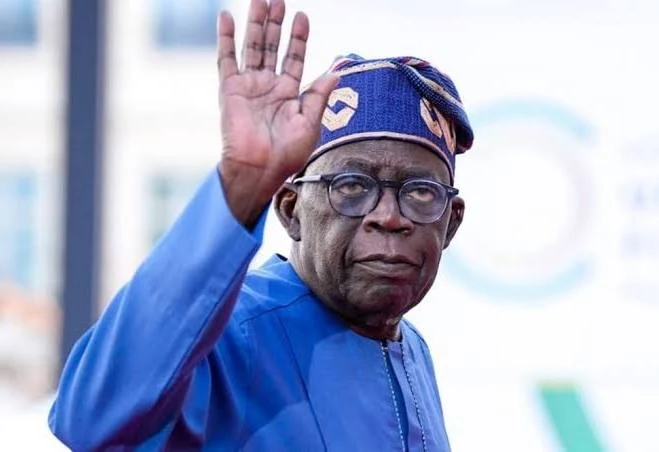
In the area of education in the country, he used the Nigerian Education Loan Fund (NELFUND) that was introduced under Tinubu’s administration as an example, which he viewed as an intervention intended to expand access to higher education for students who might otherwise struggle to afford it. “Before now, it was very difficult for a child who did not have the means to go to school. Now, everyone, except a child who does not want to go to school in Nigeria, can go to school with the NELFUND introduced by this administration,” he said. Some major infrastructural projects which the administration embarked on were not left out, including the Lagos-Calabar Coastal Highway and the Badagry-Sokoto Highway, as examples of efforts to address infrastructure deficits and stimulate economic activity.
He made mention of the fact that road networks that were very reliable, water supply, and other important infrastructure were necessary to improve living standards and support economic growth. “When we talk about economic prosperity, you cannot achieve it without a certain level of infrastructure, including road networks, water supply, and other essential infrastructure,” Barau said. He admitted the fact that providing solutions to the current developmental challenges Nigeria is facing would take time but laid emphasis on the fact that progress was being made, reiterating that inadequate communication had prevented the government from effectively conveying its efforts to the public.
Barau stated that the pressures of the domestic economy should also be put into consideration, as well as developments at the international level that are taking a toll on energy prices, production costs, and global supply chains. He used current situations going on, such as the Russia-Ukraine war and disagreements going on in the Middle East, as examples of factors contributing to global economic uncertainty and higher costs of goods and services. He made mention of the fact that these challenges were not peculiar to Nigeria; they have an international dimension, he said, adding that global conflicts had disrupted supply chains and driven up energy prices. “Nigeria is not an island,” he added.
Barau, Jibrin, who was also stated to be the First Deputy Speaker of the ECOWAS Parliament, appealed to public officials and individuals in public offices to carry the citizens along in government by explaining government policies effectively to them, acknowledging the difficulties that various households were facing, and providing clearer information about the progress of economic recovery efforts. He maintained that better communication was necessary to bridge the gap between public expectations and the government’s account of its performance.