

On Wednesday, the 28th of October, the World Health Organization (WHO) said it had not advised the Federal Government to restrict public gatherings following the Ebola case recorded in the country.
The organization, however, said Nigeria would need to go 42 days without another Ebola case to be declared Ebola-free, while 53 people who had contact with the patient remained under surveillance.
Speaking on Arise TV, Executive Director of the WHO Health Emergencies Programme, Dr. Chikwe Ihekweazu, clarified that the patient’s medical evacuation was carried out at the request of her country of origin and was not due to any shortcomings in Nigeria’s capacity to manage the case.
The quick response of Nigeria to the case was commended by Ihekweazu, saying that the laboratory confirmation and sequencing were very fast, as well as the measures taken by the government to contain the outbreak, which were commendable.
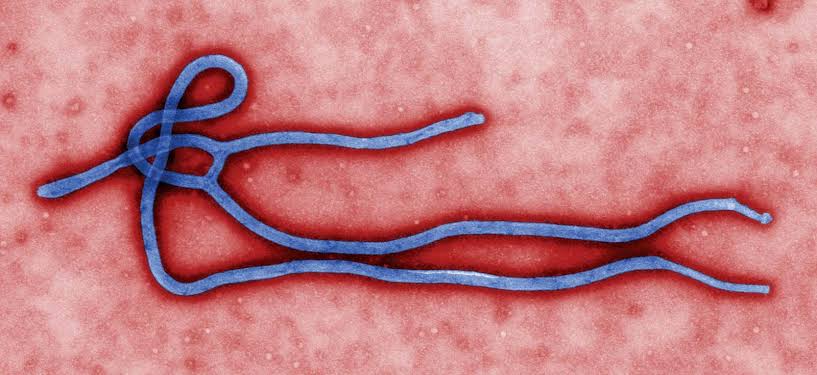
Image Credit: Britannica.com
He said, “We have advised the country to have appropriate response measures to this, and they have carried this out more or less to the letter. We have had excellent case management in Nigeria. Confirmation of the presence of the virus from the lab happened very fast. We had the sequencing happen very quickly. I think appropriate measures have been carried out. Nigerians can be proud of the response so far. We have not advised any restriction of further gatherings. Our advice is never political; it is always technical, and we will continue to support government in this response.
“The key thing now is for every single contact that the patient had to be followed up with every single day, as is happening, to ensure that there is no further transmission. If there is a case of the virus being transmitted, it must be detected very early and responded to appropriately. So, for now, I think the key thing is to keep this as a technical response, trust the government, and trust these agencies. They are being supported by the World Health Organisation in all ramifications of the response, and I am confident that we can support the government to get this under control and not politicize this event at all.”
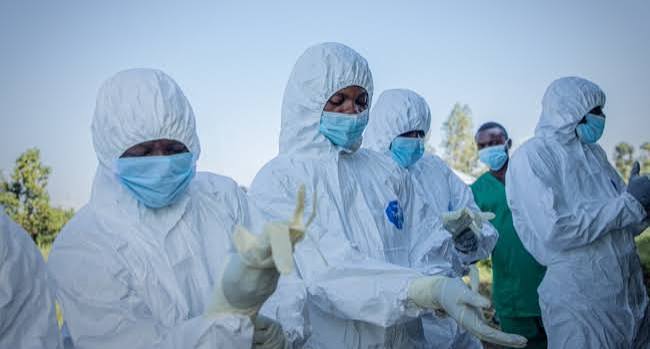
Image Credit: Channelstv
In the period required for Nigeria to be declared Ebola-free, he said, “For certain diseases, a group of diseases we call the viral hemorrhagic fevers, of which Ebola is one of them, we consider every single case equivalent to an outbreak and requiring a coordinated response. In this case, that is exactly why we raised the alarm and supported the government to do what it needed to do to respond. Yesterday, we saw the medical evacuation at the request of the country from which the patient came. This wasn’t a response to any deficit in the management capacities in Nigeria. This is at the request of the country of origin of the case.
“She was medically evacuated yesterday, as we all saw, but what it means still is that we have about 53 people, contacts, and individuals with whom that individual had contact over the days that she was ill. And now we have to continue to follow each of them for 21 days and then require another 21 days, coming up to 42, in order to declare Nigeria Ebola-free. These are the standard protocols as defined by the World Health Organization, where I work, and which we use in every country around the world that has a similar incident.”