

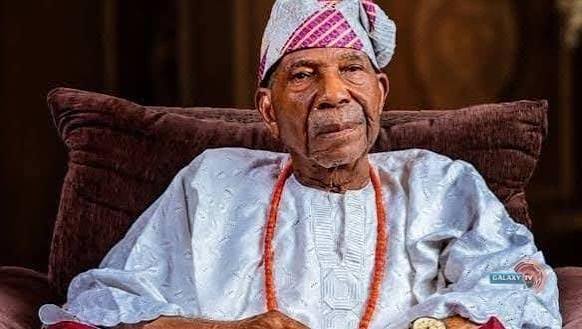
On Tuesday, October 20, 2026, at age 100, Pa Reuben Fasoranti, a dedicated follower and educationist who devoted much of his life to taking Chief Obafemi Awolowo’s political agenda to the next level, led Afenifere through one of its most significant internal crises in history before passing away. Fasoranti was born during the period when colonialists ruled Nigeria. Nigeria gained independence in his lifetime and went through successive military dictatorships and also witnessed nearly three decades of uninterrupted civilian rule. He was a loyal follower of Awolowo from the Action Group to the Unity Party of Nigeria, served in an administration dedicated to Awolowo’s social welfare philosophy, and became part of the pro-democracy struggle after the annulment of the June 12, 1993, presidential election plunged the country into another political crisis.
The Ondo State Governor, Lucky Aiyedatiwa, announced his death. A remarkable chapter in the history of Yoruba politics was closed by his death. Convergence of education, political conviction, public service, and family devotion were the principles that defined his life. He continued to be a renowned custodian of Awolowo’s political inheritance for decades, even as the movement he helped sustain became increasingly divided over how best to preserve it. The deceased was born on the 11th of 1926 in Uso, then a small community in the Owo area of present-day Ondo State. He described himself simply as a “village boy” in an interview in 2020. After failing to secure a traditional chieftaincy title, his grandfather relocated from Akure and settled in Uso on his way to Owo. His father later moved to Ayede-Ogbese.
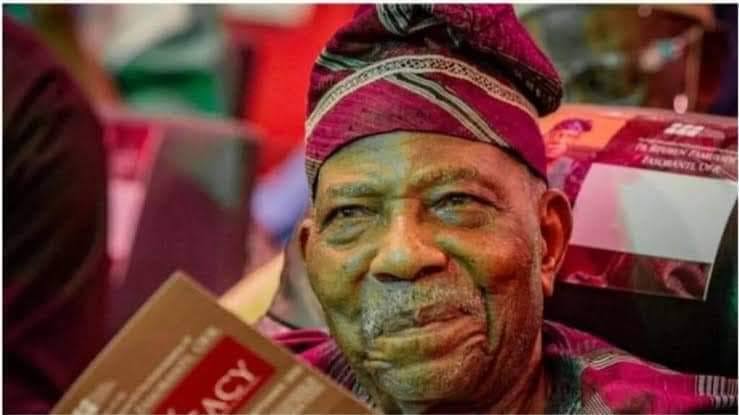
The first three years of his life were spent in a village school before he was sent to Owo for a better education. From Owo, he went to Ondo Boys’ High School, Yaba Higher College in Lagos, and University College, Ibadan, where he studied English and geography. He displayed a lighter side to his character during this period as a student. He joined a dancing club in Ibadan where classical dances, including tango, were practiced by students. During holidays at home, he didn’t stop dancing; he continued an interest that offered a glimpse of the life beyond the classroom and political platform.
Fasoranti spent about six months in search of a job in Lagos after completing his education, but he was tagged as “too young” for the positions he applied for. He returned to teaching, a profession that gradually became both his vocation and his lifelong commitment. He later obtained a postgraduate qualification in education at the University of Hull in Britain and a master’s degree in education administration and school management from Macquarie University in Australia.
Back in Nigeria, he taught at several schools, including Oyemekun Grammar School in Akure. In 1957, he became the founding principal of Anglican Grammar School, Iju-Itaogbolu, where he spent 14 years building the institution. The school opened with just 30 pupils. In its early days, Fasoranti lived in an abandoned house in the bush between the two communities as he worked to establish it. He subsequently worked in Iwo, Oyo, and Ado Ekiti before retiring from public education. He also founded private schools, including Omolere Nursery and Primary School and Akure High School, which he co-founded with his wife. Education was a shared calling in the Fasoranti household. His wife had won a government scholarship to study abroad and later returned to Nigeria to work as an education officer. Fasoranti and his beloved wife were kept apart by their respective postings for many years, but Fasoranti remembered visiting her until he was able to convince her to forgo government service and establish Omolere, which she founded.
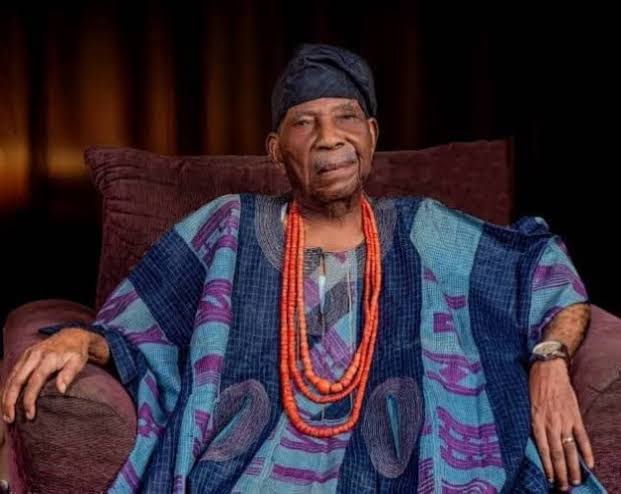
Fasoranti later became a member of the Unity Party of Nigeria, formed by Awolowo and his followers ahead of the 1979 elections. His home in Akure became a meeting place for Awolowo and his associates, including Michael Ajasin, who would later become Ondo State governor. In 1979, Ajasin appointed Fasoranti commissioner for finance when the UPN won the governorship election in Ondo State. An administration that aimed to translate Awolowo’s social welfare philosophy into public policy through free education, accessible healthcare, employment opportunities, and rural development had Fasoranti as a member.
His commitment to public service was recognized by political leaders across generations. In a tribute on Tuesday morning, Lagos State Governor Babajide Sanwo-Olu described the late centenarian as a respected statesman whose contributions to education, leadership, and public service had left an enduring mark. He also commended Fasoranti’s commitment to community development and what he characterized as his courageous and uncompromising leadership. Fasoranti’s life cannot be reduced to his position in Afenifere or his allegiance to Awolowo. The beginning of his story was in the classroom, where he assisted in the establishment of schools and spent many years shaping the education of young Nigerians. It extended into government, where he served in an administration that sought to make social welfare a central responsibility of the state. It continued through the pro-democracy struggle, when he joined others in resisting military rule, and into old age, when his name remained inseparable from debates about the future of Yoruba politics.
In the death statement released by the governor of Ondo State, Lucky Aiyedatiwa stated that Pa Fasoranti was a patriarch, a beacon of wisdom, integrity, and selfless service whose century-long life was marked by uncommon commitment to the development of Ondo State, Yorubaland, and Nigeria at large. He further said that Pa Fasoranti’s counsel, fatherly guidance, and principled stand on issues of justice and good governance will be sorely missed. He stated that the deceased lived a fulfilled life and left indelible footprints of honor and legacy for generations to come.