Why Lagos Bank Customers Are Still Shying Away From Treasury Bills. Even with interest in Treasury Bills growing among daily depositors, a lack of clear information is keeping many people from putting their money in them, as recent interviews with bank customers across Lagos show. For a lot of account holders, the investment remains something of a black box. Some people said there are many things to use money for, especially during emergencies and daily basic human needs. They said they do not have extra money to lock away for months.
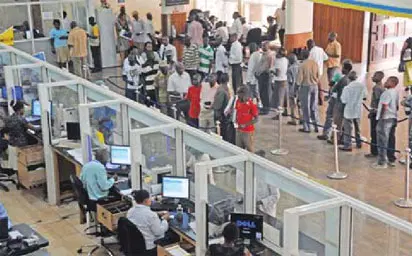
Treasury Bills, or T-bills, are short-term government debt securities issued by the Central Bank of Nigeria (CBN). Importantly, when you buy them, you are borrowing money straight from the government for a set period of time, which is usually 91,183 or 364 days, different from a normal bank account, which pays monthly interest. T bills are sold at a discount. You pay less than the face value upfront, and when the bill matures, the government pays you back the full amount, with the difference being your gain. She knows how the system works in theory.
To her, T-bills are basically just lending cash to the government and getting paid back with interest down the line. Still, she has never bought one. “The funds just aren’t there,” Anita said. As a result of inflation in the country, the price of things in the market rises almost every day. Finding spare money to lock down for 90 days is nearly impossible. But it isn’t just a money problem. Anita feels her bank should do a much better job explaining how these things work. Before putting a single naira into any new investment, she must have a good understanding of it, and the bank should use better language she understands and explain it in a simple way for her to get a proper understanding.
Her story contrasts with that of Mrs. Emily Ochuko, who uses Sterling Bank in Festac Town. Ochuko took the plunge in 2025, putting her money into a 90-day Treasury Bill through her bank. By the time it matured, she had pulled in around ₦300,000 in return. A friend pushed her to leap, and she remembered a few economics concepts from secondary school. The return was low in her eyes as a result of the rise in prices in the market, but there was no problem buying the bills. In her eyes, T-bills are still safer than almost anything else in the country. If the bank can make renewing the investment process less stressful and if there is extra cash, she will happily buy plans again. But for every customer like Ochuko, there are many like Mr. John Ndukwe.
A longtime customer of United Bank for Africa (UBA) at their Adeyemo Alakija branch, Ndukwe has run his account for nearly ten years without ever hearing about Treasury Bills from bank staff. According to him, account officers rarely mention government instruments to regular retail customers. Financial analysts say there is a reason for this silence: banks make good profit off cheap money sitting in low-interest savings accounts, so they have little reason to push government securities that move funds out of their vaults. Millions of Nigerians can never be aware of this government-backed opportunity till there is financial education by the bank officials.