
The imminent essay would lead to a query of whether the Nigerian economy has encountered significant change since the removal of crude oil as the central source of national revenue by the incumbent government. The 3.89% growth rate that is being recorded in the first quarter of this year has been its peak in the last 4 years. The elevated productivity, however, failed to return the economy to normalcy. In the last twenty years, the country has recorded approximately 2-3% economic growth, technically making it unattainable to raise the country’s standard of living even though the population has long expanded. Notably, the incumbent government, in its restructuring [in hiking oil and investment rates], has caused the economy to go through what looks like a guise of change, which one can relatively refer to as an economic recovery. These precepts are grounded in consideration of the proposed seven percent increase in the growth rate by the incumbent government in their campaign for another term in their political stance.

However, in order to set the economic situation of the state to a mammoth stance aligning it with the population growth rate, this can facilitate a robust standard of living. The incumbent federal authority is required to think beyond the jail territory of their predecessors. The most attention-worthy part is that in the second quarter of the year, the general growth rate of the country as a democratic state has gone beyond “crude oil-led growth.” Based on the National Bureau of Statistics (NBS), economic growth, excluding oil, has been recorded at 95.84% of local outcomes. A considerable question is whether the current alterations made in the Nigerian economy (more notably in the second quarter of the year) have led to an expansion in the Nigerian economy as implemented by the incumbent federal government of Nigeria. Generally, it is not to say that the current crude oil reforms have completely transformed the Nigerian economy, as economic growth in the second quarter went from an aggregate of over 7 percent to 3.89 percent within the same quarter, or the break in the power/electricity and gas industry, or the increase in the local manufacturing industry.
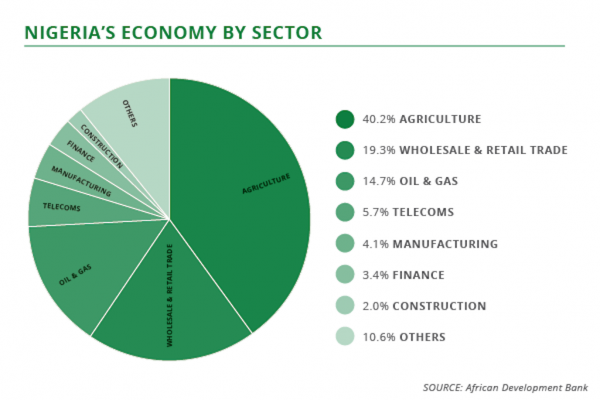
It should be considered that a country cannot achieve the change it requires by a mere 7 per cent or 4 per cent improvement in its economic stance. If Nigeria were to transform from its current low-income and productivity level, it would have to improve its agricultural and service output. Regardless of its noteworthy performance, there’s been a recent record of low productivity in agriculture, while employing a reasonable number of Nigerians remains unattainable. For a systematically reasoned approach, we are required to put a lever on agricultural productivity with the intention of boosting job availability, thereby increasing the agricultural/manufacturing programme. This, in fact, practically shows that the scarcity in domestic output has failed to encourage a structurally developed system.