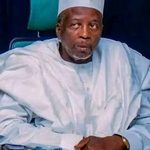

The government of the federal republic has targeted 70,000 megawatts for electricity generation, with a vision to expand power utility in industries, businesses, and households across Nigeria. At the 13th Nigeria Energy Leadership Summit in Lagos, the Minister of Power, Joseph Tegbe, disclosed his intention to stabilise the national grid, improve electricity generation, and facilitate expansion capacity.
The minister for power utility, Joseph Tegbe admitted that the vision of 70,000 megawatts compared to the current power capacity may come off as unrealistic, but it is necessary for developing industries and infrastructure. He added that despite having the capacity of over 13,000 megawatts, Nigeria has only successfully generated 5,000 megawatts of power.
The minister explained that the current 70,000 megawatts vision for 2060 is not to be compared with the current power generation level of Nigeria; rather, it is in view of achieving the capacity required for generating electricity to power industries, facilities and households.
He said this demand is in comparison to the current world utility supply. “Our plan remains that by 2060, we’re looking at 70 gigawatts for Nigeria. People will ask me a question: ‘You’re struggling with 5GW; you’re struggling with 4GW, yet you have an ambition to reach 70GW.’ The US today has a gap of 357GW just due to AI and data centres alone, not population expansion… Nigeria will not be left behind,” he said. The minister added that the federal government’s plant would cover east- west utility and would provide electricity for the country’s economic corridors. The minister revealed that about 21 dams along the Sokoto to Badagry Motorway have been considered for possible development. He said that “it will interest you that 21 dams were discovered along the Sokoto–Badagry Motorway, and the President said we should fix and sort out those dams and ensure that those dams actually result in proper hydro projects.”
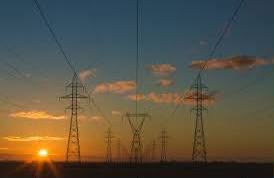
The minister revealed that the government would pursue hybrid schemes capable of generating a high power supply to support agricultural and industrial sectors. He asserted that the federal government and state governments would unite to align in these electricity projects. The Lagos State Commissioner for Energy and Mineral Resources, Biodun Ogunleye, opined that sustainable and reliable electricity remains one of the top priorities of the nation’s economic vision.
The commissioner also posited that the Lagos State Electricity Action Plan 2024 has established a framework to strengthen electricity. Ade Yesufu, the Exhibition Director, Energy Portfolio at IND, opined that Nigeria had the potential to facilitate an improved and reliable electrical supply.
“Many of us in this room grew up knowing the joy of hearing the whole street scream ‘Up NEPA!’ We still do to this very day. I believe everyone here shares the same hope that the next generation of Nigerians will grow up without ever needing to experience this type of excitement because reliable power will simply be a part of everyday life. That is what brings us here today,” Yesufu said.