
Former Vice President Yemi Osinbajo, at the Good Governance Africa (GGA), has expressed his concern about the credibility of the democratic system in Nigeria and Africa in the diaspora. He encouraged the government to push for better democratic rule by upholding accountability, transparency, and providing necessary solutions to the plight of the people. This he asserted is to deliver transformative reforms to the people to strengthen public dependency and trust on the democratic system.
Mr Osibanjo gave this speech at the annual lecture held on the 22nd of October, 2026, in Accra, Ghana. The scheme was themed “Democracy Under Pressure: Rebuilding Trust, Accountability, and Institutional Integrity in Africa’s New Political Era”. He highlighted Afrobarometer’s 2024 flagship report, stating that from 2021 to 2023, only 37 per cent of the 66 percent of persons whose preference was a democratic system in their respective countries were satisfied with the practice of democracy. He added that about 53 per cent chose to opt for a dictatorship system if the government consistently use power to their interests.
The former vice president, Yemi Osinbajo, reported that the constant negations of democratic rule have bridged a gap between the government and its people, causing the confidence of the people in constitutional rule to be weakened as the government has failed to adhere to public concerns. Advised that democracy and the protection of human rights and dignity be enforced to ensure the survival of the democratic system. Democracy in Africa is clearly under pressure,” he said. He added that Africa has experienced 11 successful coups between 2020 and 2026 and warned that a military regime cannot extinguish the country’s democratic struggles.
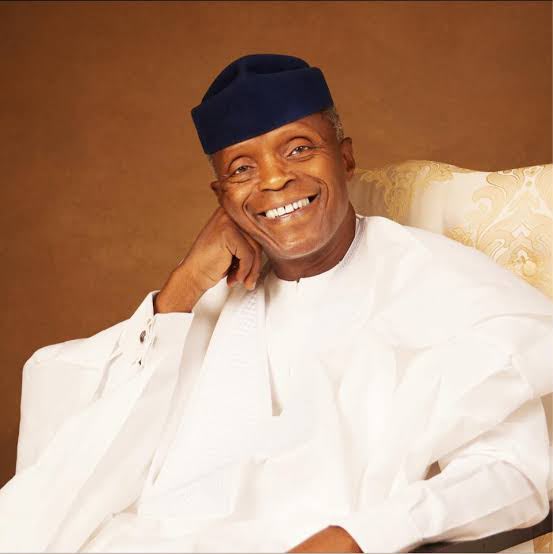
Mr Osinbajo asserted that dissatisfaction with an incumbent doesn’t constitute an invalidated democratic system. He added that 11 per cent of persons who have experienced unconstitutional changes of government sought a non democratic form of government. He opined that the government should demonstrate proper accountability while protecting the citizens’ rights and facilitating public institutions.
The words of knowledge from the lecture emphasised institutional integrity, accountability, and Africa’s development prospects. According to the founder and outgoing chairman of GGA, the organisation was established over a decade ago to promote independent research, policy analysis, and engagement with policymakers, civil society, businesses, and communities. He opined that the organisation was created to strengthen Africa’s development and not solely to decide on its method of governance. Mr Rose emphasised the enforcement of existing laws and accountability, stating that resources reserved for public purposes should be used for the same purposes.
Mr Rose stated the GGA’s plan to work together with the international corruption court to establish a framework that holds perpetrators accountable on major corruption cases. He added that this court would strengthen the justice system rather than eliminate it. Mr Robert Rose highlighted that corruption costs the world and constrains public development and resources. He argued that investment schemes and businesses require governance that ensures accountability and fairness. Mr Deji Haastrup, GGA’s vice-chairman and chief executive officer, said that public trust can be earned by institutions demonstrating transparency and integrity. “Trust cannot be demanded. It must be earned,” Mr Haastrup said.