
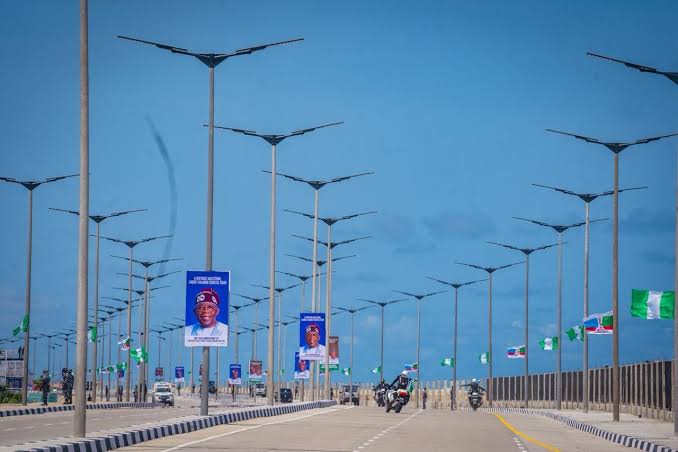
David Umahi, the Minister of Works, has disclosed that the 750-kilometer Lagos-Calabar Coastal Highway has no single engineering design more than two years after construction began in March 2024, insisting that the project is being designed and costed section by section. Umahi, who spoke during a one-hour-30-minute interview on Arise Television monitored by our correspondent on Friday, said there was no comprehensive engineering design covering the entire highway, which the Federal Government has presented as one of President Bola Tinubu’s flagship infrastructure projects.
This information was made known as a result of persistent questions about the overall cost of the project construction process, environmental approvals, and the government’s capacity to complete the highway. The minister said a standard carriageway comprising two lanes would cost about $5.5m per kilometer (N7.3bn), based on his comparison with a coastal highway project in the neighboring Republic of Benin. He said this in defence of the cost of the first section.
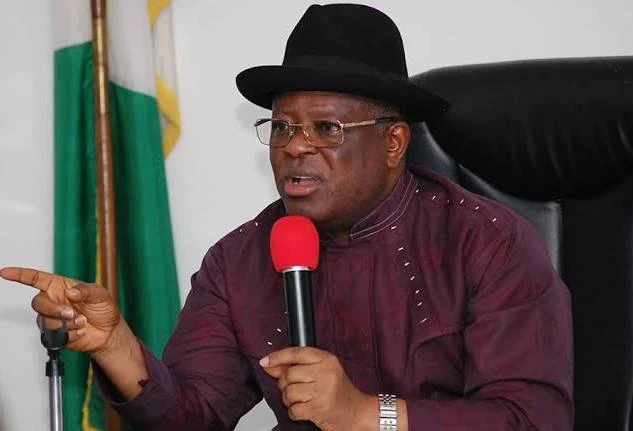
Image Credit: Premium Times Nigeria
It was also mentioned that the calculation of the cost of the entire 750 km highway using an estimated average cost was challenged by the minister, arguing that the terrain, bridges, and engineering requirements differed across sections. “There is no single design of any road project that came out, you know, in reality, at the end of the project, the way it was designed,” Umahi said. Asked directly whether there was an engineering design covering the entire Lagos-Calabar Coastal Highway, he replied, “So these are the procedures. So there is no single design that the 750 kilometers of Lagos-Calabar Coastal Highway is based on. There’s no single design.”
The minister said the highway had been conceived as far back as 1955, while the concept was gazetted in 2006. However, he maintained that he had not found a complete engineering design, subsoil investigation, or other detailed technical documents covering the entire route in the ministry’s archives. The minister made mention of the fact that engineering designs are developed for individual sections after environmental assessments and soil investigations establish the route, terrain, and technical requirements.
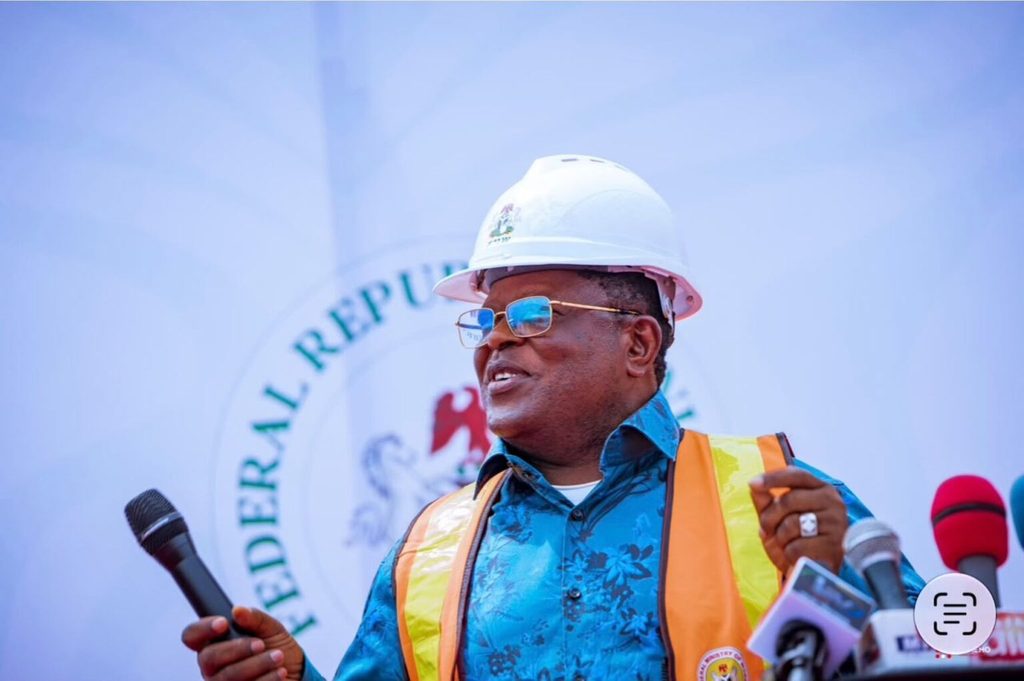
Image Credit: The Guardian
It was also stated by David Umahi that the Federal Executive Council-approved procurement arrangement required the project to be procured section by section, adding that the approach made it inappropriate to multiply an estimated average cost by the entire 750km. “Who fixed this N15tn that people are just, you know, brandishing everywhere? Who fixed it? And let me also clarify that nobody has the right to do an average cost and multiply by 750,” he said.
Questions about how the government intends to establish the total financial commitment, assess the highway’s overall value, and communicate its completion cost to Nigerians in the absence of a single design and a comprehensive project cost have been raised. In his cost comparison, Umahi referred to a 47 km section of the highway and a 47.47 km coastal road in Benin Republic, which he said cost N1.06 tn. He cited a figure of about N7.5bn per kilometer for a three-carriageway configuration and adjusted it to estimate the cost of a standard two-lane carriageway.
He maintained that environmental assessments were being handled section by section rather than through a single assessment covering the entire 750km route. He also said the ministry had obtained final environmental approval for the first 47 km section.
A lot of criticism has been attracted by the highway over its cost, route, and the implications it has had on the environment since its commencement. The government stated that its intention was to improve connectivity along Nigeria’s coastline using it as a major transport corridor. Some clarifications on the additional 400 km linked to the project were given by Umahi following questions about whether Tinubu had ordered a diversion from the original route, and he said that the additional stretch was to connect the coastal highway to the existing East-West Road through Edo State, rather than abandoning the original alignment.