
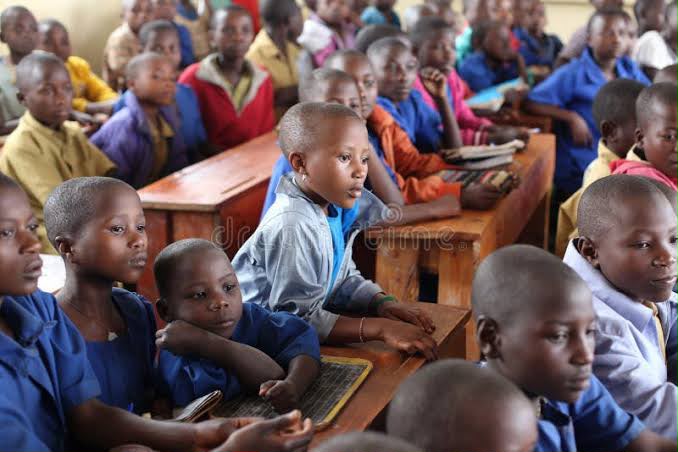
The National Human Capital Development Program has said that the country’s increasing learning disintegration has been an issue of particular concern. The initiative laid emphasis on coordinating a working scheme to increase learning productivity within the federation. Rukaiya el Rufai, the National Coordinator of the National Human and Capital Development 2.0, who is also the special adviser to the president of the National Economic Council, disclosed this at a media engagement on Monday, 6th October 2026. The coordinator posited that being present at school may not necessarily guarantee that the children are getting the necessary literacy required for the coming years; their numeric literacy, he believes, may help in facilitating productivity and promoting a better economy. She further said, “The one that worries and scares me is that learning poverty is so high at 70%, with numeric and English literacy at 11-12 percent. In fact, the World Bank puts it at 85 percent, so it is not even the kids that are in school; what they are learning is not sufficient.” According to the national coordinator, the result of this negligence as relating to the literacy of the infant child may largely amount to making it impossible to get the requisite employment due to a low productivity rate. El Rufai implied that some of the sophisticated jobs and skills cannot be acquired with this perceived minimal learning productivity. She also said that the youth are not in employment, education, or training.
The human capital development scheme focuses primarily on the general acquisition of means of livelihood, with education at its top priority. El Rufai addressed six factors that may have led to scaling probable outcomes that could improve the human capital index in Nigeria. She insisted that the Nigerian labor market may not improve significantly if the Nigerian education system is left unattended. She said, “I know this kind of thing; you can’t even.” It’s just like when Dangote was building a refinery; they couldn’t train our welders because they lacked the knowledge of geometry. “She said that the fact that the issues are not the same across the country means a single move may not be a permanent solution. So she said, “We have been having regional sessions with the states because the results are so polarized. You look at the north; you see. You look at the south, so it shows us that there is no one-size-fits-all. Because what we’ve done is we have this national framework; each state is now developing theirs. So they’re picking based on the nuances of their own developmental challenges. They’re coming up with their own HCD plans.” The program aims at introducing evolutionary participatory tools where needed. It was asserted by the director of advocacy and communications at the program that the intention is to ensure that the health and education system of Nigeria is functional, encouraging the preparation of young people to face the labor market and transform the economy.