


The Independent National Electoral Commission has listed the states with the highest number of registered voters ahead of the 2027 general elections, including Lagos, Kaduna, and Kano. The INEC chairman, Professor Joash Amupitan, revealed this at a press conference and stakeholders meeting in Abuja on Tuesday, 6th October, while providing information on the National Voters’ Register. Amupitan stated that the voter register now contains over 103 million voters who have completed the commission’s three-phase continuous voter registration process and necessary biometrics.
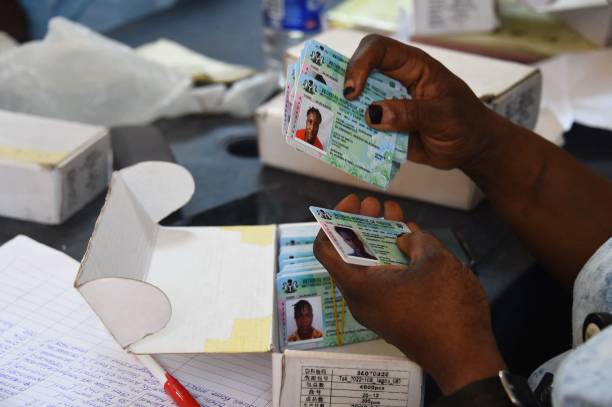
An official of the Independent National Electoral Commission (INEC) sorts out Permanent Voters Card (PVC) of voters at a ward in Lagos on January 12, 2023 ahead of the February 25 presidential election. (Photo by PIUS UTOMI EKPEI / AFP) (Photo by PIUS UTOMI EKPEI/AFP via Getty Images)
Amupitan said Lagos State is currently number one on the list with a total of 7,488,633 registered voters, Kano second with 6,570,276 registered voters, and Kaduna third with 4,662,640. Registered voters. “The top 10 states by number of registered voters are Lagos State in first position with 7,488,633 registered voters, followed by Kano State with 6,570,276. Next is Kaduna State with 4,662,640 voters. Next is Katsina State with 3,876,051,” Amupitan said. From the top ten states, he listed Rivers as fifth with a total of 3,736,434 registered voters, Oyo State as the sixth with a total of 3,588,111 registered voters, Delta State as seventh with a total of 3,525,988 registered voters, Benue State as eighth with a total of 3,057,225 registered voters, Ogun State as ninth with a total of 3,037,981, and Bauchi State as the tenth with a total of 3,012,547 registered voters.
A total of 10,772,421 new registrations were recorded from the three-phased CVR Exercise before the final biometric verification and clean-up of the register. Nationwide collection of newly issued permanent voter cards has been scheduled by INEC to begin on the 9th of October 2026. Ekiti State is at the bottom of the table with a total of 1,055,708 registered voters, after which is Bayelsa, with a total of 1,200,691. From the bottom, the Federal Capital Territory ranks third with a total of 1,732,043 registered voters, after which are Ondo State with a total of 1,733,641 registered voters and Gombe with a total of 1,768,560 registered voters.
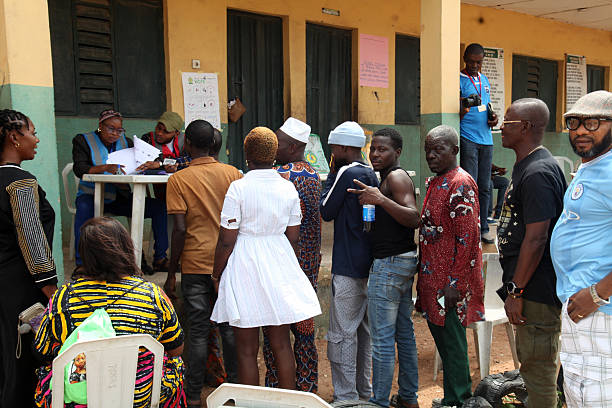
Professor Joash Amupitan demographically broke down the register, saying the male voters numbered 53,528,218, representing 51.75 percent, while female voters stood at 49,900,497, representing 48.25 percent. Amupitan said that voters aged between the ages of 35 and 49 years were the largest age group, with 43,265,946 voters, representing 41.83 percent of the register.
Representing 28.79 percent, Amupitan mentioned that individuals in the age range of 18 to 34 years had a total number of 29,777,576, while voters between the ages of 50 and 69 years had a total number of 22,982,900, or 22.22 percent. Voters who are 70 years and above constituted the smallest age group, with 7,402,291, representing 7.16 percent. It was also stated that people who are physically challenged numbered 232,658 across 10 categories, representing about 0.23 percent of the total register. Amupitan said the largest category was classified as “others,” with 101,183 voters, representing 43.49 percent of registered persons with disabilities.
Individuals with albinism numbered 44,023, representing 18.92 percent, and those with physical impairment numbered 27,141, representing 11.67 percent. The register contains 19,936 persons with visual impairment, representing 8.57 percent, and 14,326 persons with hearing impairment, representing 6.16 percent. According to the INEC chairman, 8,832 voters are registered under autism, representing 3.80 per cent, while 7,723 are classified as having cognitive or learning disabilities, representing 3.32 per cent. Professor Amupitan stated that the aggregate number of registered voters is 103,428,715.